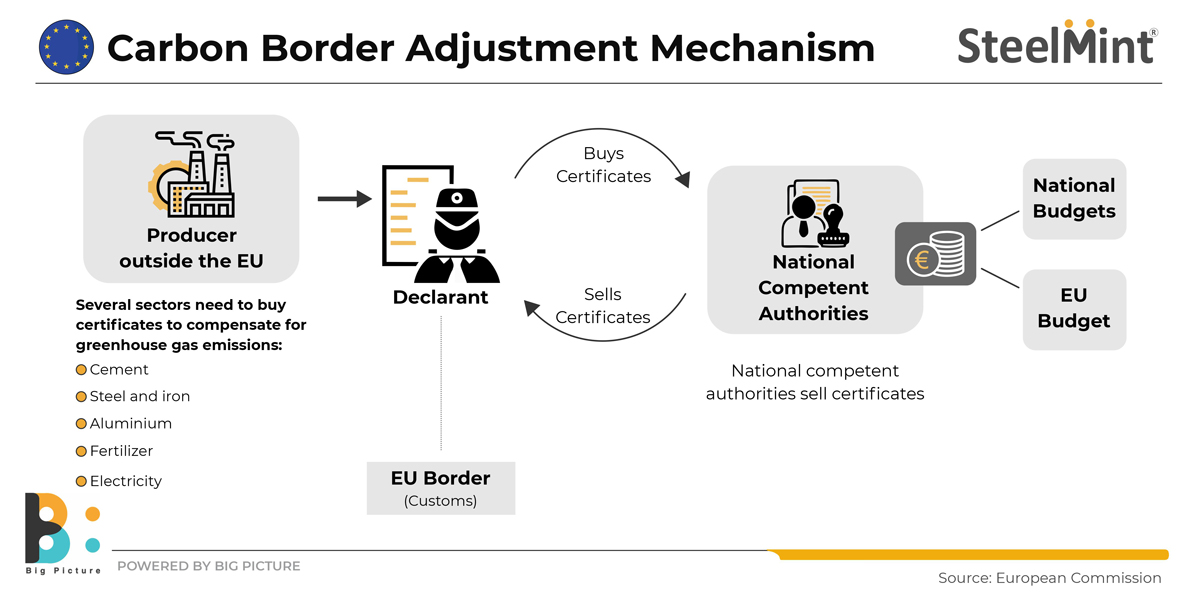
The Asian Development Bank (ADB) pointed out in a report on 26 February that the European Union’s (EU’s) Carbon Board Adjustment Mechanism (CBAM) will have limited impact on emission curbing around the world, yet be likely to negatively affect Asian subregions like Central and West Asia with higher shares of carbon-intensive exports to Europe.
EU’s CBAM, set to go into force in 2026, will impose an import tax on carbon-intensive products from non-EU countries, with the initial six product categories being iron and steel, cement, fertilizer, aluminum, hydrogen and electricity generation, as per Mysteel’s earlier post.
However, statistical modeling shows that CBAM is likely to reduce global carbon emissions by less than 0.2% relative to an emissions trading scheme with a carbon price of EUR 100 ($108) per tonne and no carbon tariff, as per the findings of the Asian Economic Integration Report (AEIR) 2024 released on Monday.
At the same time, these charges are anticipated to lead to a decrease in global exports to the EU by approximately 0.4% and Asian exports to the EU by roughly 1.1%. Additionally, it may cause negative impacts on the output of certain manufacturers within the EU.
“To significantly reduce carbon emissions globally, while also making sure climate efforts are more effective and sustainable, carbon pricing initiatives need to be extended to other regions outside the EU, especially Asia,” said ADB Chief Economist Albert Park.
The AEIR report also underscores the necessity for implementing strategies to decarbonize international trade and global value chains. Notably, carbon emissions from these sources are escalating at a faster pace compared to other sources, with Asia experiencing particularly rapid growth in emissions compared to other regions.
Note: This article has been written in accordance with an article exchange agreement between Mysteel Global and BigMint.