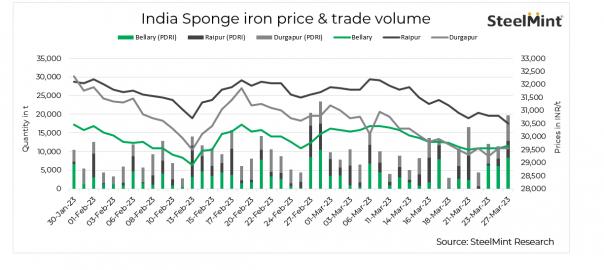
Indian sponge iron prices saw a slight increase of INR 50-200/tonne (t) in some key locations on the back of active demand, optimistic sentiments and higher offers. On the other hand, prices in the central region dropped by INR 250-300/t as buyers showed reluctance to book material at higher offers.
A total of 29,300 t of transactions were recorded today as against 21,100 t on 24 March.
Rising billet prices, positive outlook support sponge iron
The uptick in sponge iron prices can be partially attributed to an increase in billet prices (+ INR 100-300/t), which encouraged producers to maintain higher offers. Demand for sponge iron was also strong which is evident from the flurry of deals that took place.
The positive market trends led buyers to take positions as they expect prices to rise further in the near future. This resulted in an increase in trade volumes as more and more buyers entered the market.
Snapshots of key markets
- Rourkela: The uptick in prices can be attributed to active demand and higher offers from suppliers. A rise in steel prices in the northern region, particularly Punjab, resulted in demand recovery for sponge iron.
- Raipur: Due to weak demand and limited trade, sponge iron prices in Raipur dropped. Due to the market’s general reluctance to trade as the end of the financial year approaches near, buying activity has slowed down.
- Bellary: Active trade for finished and semi-finished steel resulted in increased spot buying of sponge iron d-o-d. According to sources, buyers are actively purchasing sponge amid an anticipation of a price rise in the coming days.
- Durgapur: The market is almost stable with a slight rise in prices. Spot trade improved as buyers booked healthy volumes today. Market participants are optimistic about a rise in near-term prices.
- Ramgarh: Bulk bookings were seen at current prices, resulting in a hike in prices.
Rationale –
Prices have been derived based on transactions, offers, bids and indicative price data sets. Transactions are considered as T1 and given a weightage of 50% whereas other data sets are considered as T2 and given a weightage of the balance 50%.
Click for detailed methodology
 T1 – Trade, T2 – Offer/Bid/Indicative


Leave a Reply